Real-time condition monitoring is essential to maintaining safety, efficiency, reliability, and productivity in increasingly interconnected industrial environments — especially as organizations contend with skilled labor shortages and rising efficiency demands. We spoke with Markus Kraess, a Product Manager at Altech Corporation, to learn more.

Real-time condition monitoring is crucial for maintaining optimal equipment safety, efficiency, reliability, and productivity in demanding industrial environments. The ability to aggregate and analyze accurate, actionable data in real-time can be a game-changer in terms of eliminating unplanned downtime and enhancing equipment performance. We spoke with Markus Kraess, a Product Manager at Altech Corporation, to learn more.
Markus dives into the fundamental aspects of modern condition monitoring solutions, explains how these products help industrial organizations improve operations, introduces Altech’s new DO-1 Modbus Monitoring Device, and addresses how Altech’s longstanding partnership with RS helped make this innovative technology accessible to customers looking to streamline their industrial operations.
Hi Markus. Please talk to us about condition monitoring.
Hello. Condition monitoring is a critical process used across the industry to ensure the reliability and efficiency of machines and systems. It involves continuously tracking various parameters — such as temperature, pressure, vibration, humidity, and energy usage — using sensors and monitoring devices. These devices collect real-time data to analyze system behavior, detect anomalies, and anticipate faults, breakdowns, and maintenance needs before failures occur.
In the past, condition monitoring was a manual and localized process. Data had to be read directly from sensors and written down for analysis, which was time-consuming, labor-intensive, and limited in scope. Over time, the introduction of programmable logic controllers (PLCs) and automation streamlined data collection and analysis. Now, with advancements in IIoT and Industry 4.0, the process has transformed entirely, becoming much more scalable and automated.
The benefits of modern condition monitoring are substantial. By identifying potential issues early on, organizations can schedule proactive maintenance, reduce equipment downtime, and avoid costly emergency repairs. In this way, condition monitoring is like a health check for machines, preventing unexpected failures in much the same way that routine doctor visits help us maintain our own good health.
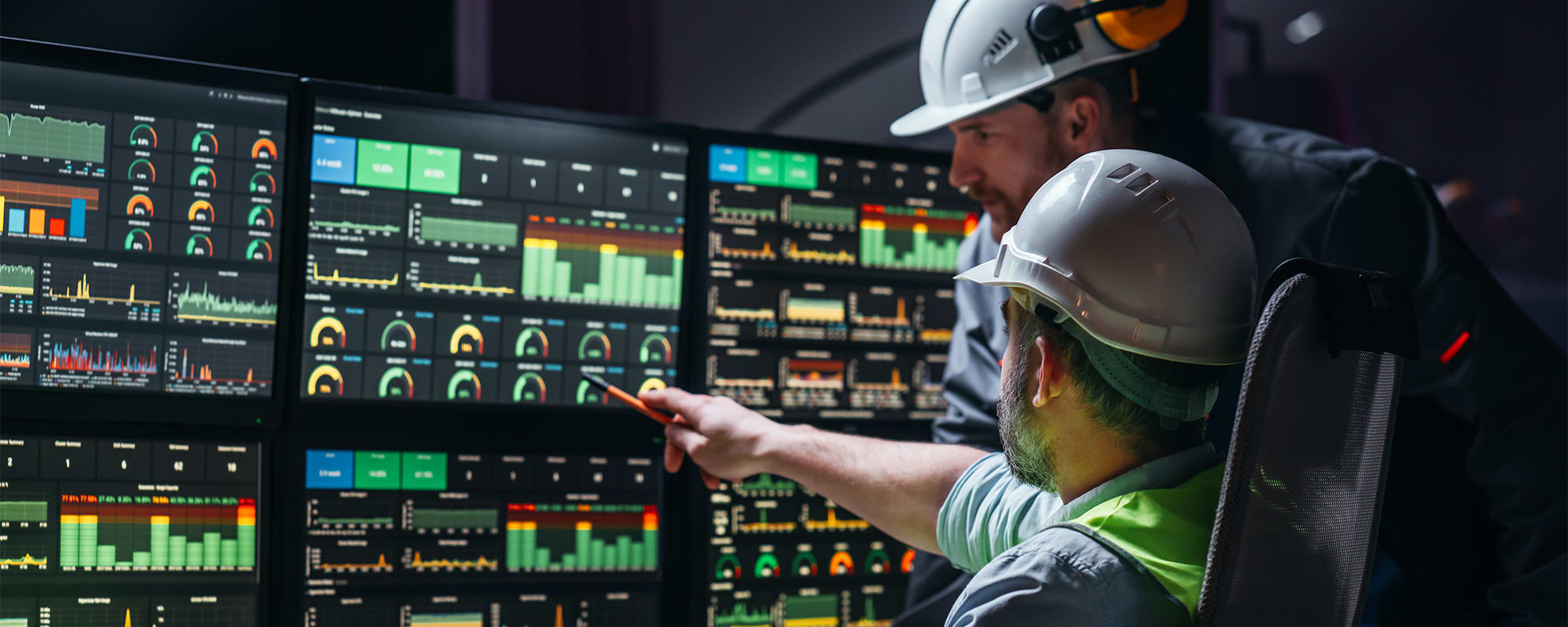
Modern condition monitoring systems leverage AI, high-speed data, and interconnectivity to monitor operations in real-time across multiple locations. They also utilize standardized communication protocols and user-friendly human-machine interfaces (HMIs) that allow engineers and operators to view insights from centralized dashboards, often enhanced with intuitive graphics. These features enable smarter, faster decision-making with less reliance on manual labor, which is especially valuable given the global shortage of skilled technical workers.
In addition, the impact of condition monitoring is felt across a broad range of industries. For example, in the energy sector, it helps maximize output and enhances operational efficiency. In manufacturing and logistics, it minimizes downtime, leading to smoother operations and more reliable supply chains. Ultimately, condition monitoring benefits everyone — and especially end consumers — by ensuring products and services are delivered efficiently and reliably to end users.
What’s one solution that can help organizations implement condition monitoring?
One powerful solution that can help industrial organizations implement condition monitoring is the implementation of monitoring relays. These devices play a critical role in condition monitoring by continuously measuring key parameters and conditions, like voltage and current levels. They detect fluctuations, such as surges or drops in the electrical supply, and act instantly to prevent damage to sensitive and costly equipment. I often compare monitoring relays to health insurance for your systems, as they’re a relatively inexpensive investment compared to the value of the equipment they protect.
Monitoring relays are typically installed directly on machines. They monitor operating conditions in real-time and respond to predefined events, such as overvoltage, undervoltage, and power losses, and other unexpected imbalances. For instance, if there’s an unexpected voltage surge, monitoring relays can automatically disconnect the circuit to safeguard the equipment and prevent expensive damages. These relays can also communicate data to remote monitoring systems, enabling deeper analysis and triggering actions further up or downstream in industrial processes.
In more advanced systems, monitoring relays can go well beyond basic equipment protection, analyzing energy consumption, power, and frequency, and sending actionable data to centralized systems or remote collection points for users to interpret and make informed decisions. This is particularly valuable in interconnected equipment configurations, where an issue with one machine could impact others. For example, if a motor in a conveyor belt system overheats due to a blockage, a monitoring relay can detect the anomaly early, shut down the motor to prevent damage, and trigger a warning light or alarm for human operators. Similarly, in pump system applications, these relays can stop the pump in the event of overheating or irregular power usage, safeguarding the entire operation.
And while monitoring relays have proven beneficial in a variety of industrial contexts, they have become all but indispensable in the energy sector. Energy efficiency and cost savings are top priorities for today’s industrial organizations, and these devices can help users monitor energy production and consumption to ensure power is used as effectively as possible. By identifying and eliminating power losses, organizations can save money while maximizing their energy efficiency — all thanks to real-time, streamlined data collection. With the right sensors and monitoring systems in place, organizations can ensure their processes run smoothly, minimize energy waste and costs, and protect their valuable assets.
How do Altech’s monitoring relays outperform other solutions available on the market?
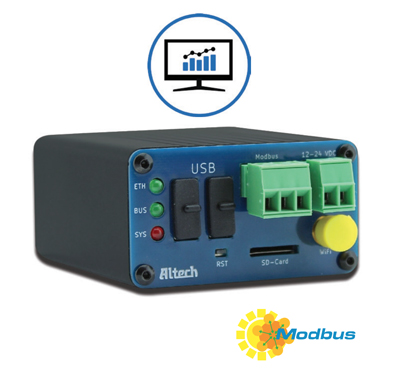
Altech’s monitoring relays set a new standard for condition monitoring by offering real-time insights and a centralized view of operations. At the core of Altech’s solution is the new DO-1 Modbus Monitoring Device, a compact, universal, and highly adaptable data-collection system.
The DO-1 can monitor up to 128 devices, regardless of manufacturer, as long as they are compatible with Modbus RTU or Modbus TCP protocols. This flexibility allows users to integrate sensors from different vendors — such as those used to measure temperature, humidity, vibration, and current — to create a unified monitoring ecosystem. By consolidating data from various sources into a single system, the DO-1 reduces complexity and allows users to see the big picture of their operations, which can help them streamline processes and make more informed decisions.
The DO-1 comes with a built-in, fully customizable, and user-friendly web server and browser-based software. Operators can create personalized dashboards to display key metrics, set up alerts, and generate visual representations, like graphs and charts, that make complex data easy to interpret for both technical and non-technical users. Data can be stored on the device’s 5GB internal memory or an up to 128GB external SD card. The device supports Wi-Fi connectivity, eliminating the need for extensive network wiring, and can even be customized further with features like Bluetooth integration. Additionally, unlike many other solutions, Altech’s relays don’t require ongoing subscriptions or licenses. The features are included in the purchase price, offering superior value and long-term cost savings.
The DO-1 is also versatile enough to support a wide range of applications. In energy monitoring, for instance, it consolidates data from multiple sensors across a building into a single, centralized location, eliminating the need for separate monitoring systems and reducing labor costs. In factories, it enables preventive maintenance by identifying potential issues before they cause costly downtime. In highly temperature regulated applications, like greenhouses, the DO-1 monitors conditions, like temperature and humidity, to optimize growing environments. In server rooms, it safeguards sensitive equipment by tracking airflow and temperature to prevent overheating. It is also well-suited for the oil and gas industry, where it can monitor pressure and flow in pipelines to ensure safety and efficiency. By integrating data from various sources, eliminating hidden costs, and offering unmatched flexibility, Altech’s DO-1 monitoring relays empower organizations to optimize performance, protect critical systems, and achieve significant cost savings in a single, comprehensive solution.
I’m excited that RS will be the first distributor to introduce the new DO-1 Modbus monitoring device to customers. As a longstanding and trusted partner of Altech with exceptional market reach, RS is uniquely positioned to bring this cutting-edge technology to a broad range of industrial environments and ensure that this groundbreaking device will empower customers to stay informed and in control of their industrial facilities and plants.
Altech and RS make it easy to aggregate, analyze, and apply your data
Altech Corporation is a trusted ISO 9001-certified supplier and distributor of electronic and control components engineered for use in a wide range of industries and backed by 40 years of proven design and development experience, a team with comprehensive technical acumen, and a global reputation for robust and effective customer service.
RS offers an extensive selection of Altech products, including the new DO-1 Modbus Monitoring Device and a variety of connectors, circuit protection devices, wire and cable, switches, relays, enclosures, racks, and cabinets, test and measurement solutions, sensors, industrial controls, lighting and indication, and power products.
For more information about Altech’s new DO-1 Modbus Monitoring Device and the other Altech products available at RS, please visit the links embedded here. For assistance identifying, procuring, deploying, and maintaining Altech condition monitoring products sure to satisfy your unique application demands, please contact your local RS representative at 1.866.433.5722 or reach out to the RS technical support team.