Mechanical power systems are the backbone of industrial operations, but reliability gaps can lead to costly downtime. This article explores proactive strategies and introduces advanced products from predictive maintenance technologies to soft starters, belts, and gearmotors that help optimize performance and reduce risk.

Mechanical power systems are the backbone of industrial operations, driving everything from conveyor belts and gearboxes to HVAC systems and process manufacturing equipment. When mechanical power systems are down, so are many other factory systems. So, the cost of unplanned downtime resulting from these failures is very high, averaging $260,000 per hour in the discrete and process manufacturing, packaging, and utilities industries.
Common causes for mechanical power system failures include bearing, shaft, and coupling misalignment, improper belt tensioning or lubrication, gearbox overloading, motor and belt failure, and torque shock during motor starts. These conditions lead to elevated vibration, premature wear, belt slippage, overheating, and ultimately, catastrophic breakdowns.
Without proactive measures — such as predictive maintenance (PdM) strategies and technology solutions, like soft starters, designed to enhance mechanical power system reliability and minimize operational risk — industrial organizations not only face significant repair costs but also lost production, missed delivery deadlines, and reputational damage. Further, the impact of these challenges often creates a ripple effect throughout the entire organization, saddling maintainers with increased troubleshooting demands, plant managers with increased pressure to meet production targets amid unexpected downtime, buyers with the responsibility of sourcing reliable components under urgent conditions, and mechanical engineers with redesigning systems to prevent future failures.
Current recommendations for mechanical power reliability Imagine a world where your machines could warn you before they fail, saving you millions in downtime and repair costs. This isn’t science fiction; it’s a reality of predictive maintenance strategies powered by smart technologies and advanced analytics.
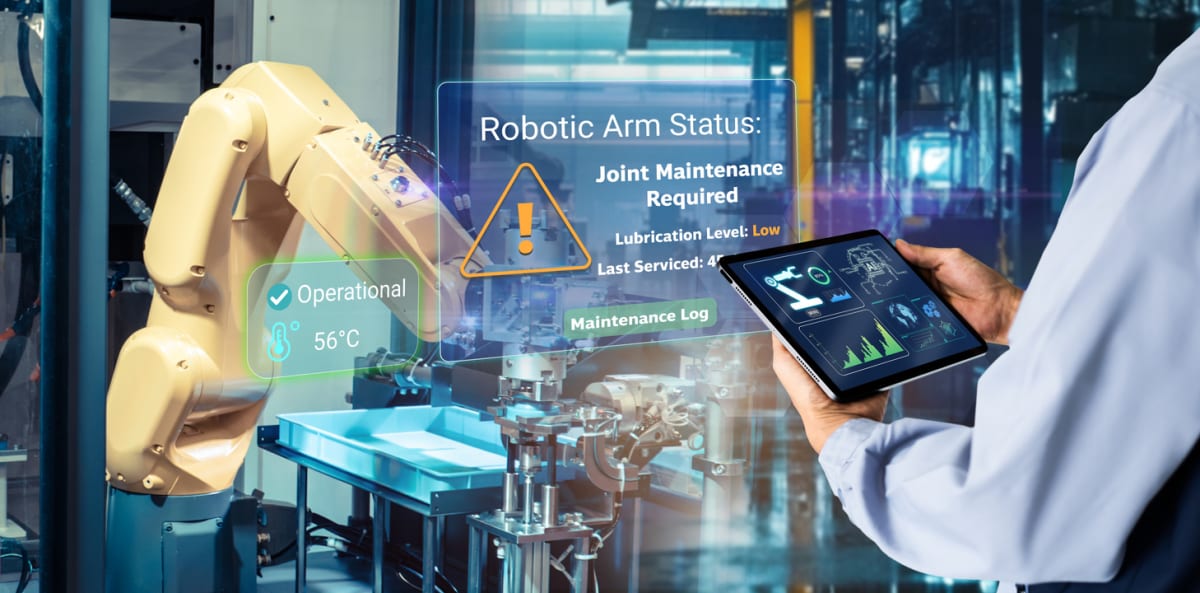
Traditional run-to-failure strategies accelerate wear, shorten equipment lifetimes, and lead to emergency repairs that compound downtime costs. Predictive maintenance flips that model by using real-time data to anticipate issues before they happen, enabling proactive interventions that optimize performance to maximize uptime.
Predictive maintenance combines several technologies:
- Connected sensors and IoT devices track real-time machine health indicators, like vibration, temperature, and load.
- Machine learning models analyze patterns and detect anomalies that signal impending failure.
- Predictive algorithms calculate the remaining useful life of critical components.
- AI-based planningtools optimize maintenance schedules to prevent costly breakdowns.
PdM is growing but not yet universal. Roughly 41% of industrial manufacturers have already leveraged predictive analytics and seen significant impacts, including:
- A 30–50% reduction in unplanned downtime
- 12% fewer scheduled repairs when using IIoT-enabled maintenance
- Extended equipment lifetimes
- Improved reliability for high-load applications
It can also help manufacturers cut their operating costs by 25–30%.
Additionally, downtime doesn’t just affect machines. It strains people and processes. When equipment fails unexpectedly, the pressure to restore operations quickly can lead to stress and burnout, especially since skilled‑labor shortages remain a leading challenge for maintenance programs. In fact, 67% of industrial workers report feeling overwhelmed by urgent repair demands, while 47% of manufacturers cite a skills gap as a major barrier to effective maintenance. Compounding the issue, 59% of maintenance teams feel understaffed, making reactive firefighting the norm.
By integrating predictive maintenance technologies, industrial organizations are reversing this trend. RS recommends prioritizing investments that include clear ROI baselines, such as downtime cost/hour or critical‑asset list alignment. Real-time monitoring and AI-driven insights reduce emergency repairs, ease workload pressure, and help close the skills gap through smarter, data-supported decision-making. The result? A more resilient workforce with less stress, improved job satisfaction, and advantages that extend well beyond equipment uptime to overall business performance.
Smart automation and control solutions for mechanical power systems
Mechanical power systems rely on several key components, including gearmotors, gearboxes, motors, bearings, couplings, belts, and belt drives, to keep industrial processes moving. Selecting quality components and combining them with smart automation and control technologies, such as soft starters, vibration sensors, and alignment tools, is a sure-fire way to reduce mechanical stress, optimize energy usage, prevent equipment failures, and maximize uptime in demanding industrial applications, including discrete and process manufacturing, material handling and packaging, and HVAC systems.
Gearmotors are essential for reliable power transmission, especially in environments where contamination, moisture, and harsh washdown conditions can compromise performance. Traditional gearboxes often fail due to poor lubrication and the ingress of water or chemicals, both of which can lead to costly downtime and maintenance. Gearmotors with advanced washdown protection — including robust stainless steel constructions and IP69K sealing — address these challenges by preventing contamination, reducing corrosion risk, and maintaining lubrication integrity and are especially well-suited for food, beverage, and chemical processing applications with rigorous hygiene and uptime requirements.

Bison 261 Series SANIMotor gearmotors are engineered for durability and sanitation compliance in demanding environments. Featuring an IP69K-rated stainless steel design, these gearmotors withstand pressurized hot water and chemical washdowns without compromising performance. The sealed stainless-steel shell, EPDM O-rings, and triple-lip shaft seals prevent water and contaminant ingress, while food-grade H1 grease provides lifetime lubrication for maintenance-free operation. Built for continuous duty, SANIMotor gearmotors incorporate modular gear trains with sealed ball bearings and inverter-duty AC motors, delivering rugged reliability for applications such as conveyors, mixers, and pumps in food and beverage processing facilities. For more information about Bison Gear (AMETEK) SANIMotors and overcoming common food and beverage manufacturing challenges, including tracking and tracing requirements, visit the embedded links.
Belts are a cornerstone of industrial power transmission, but they’re also a common failure point when tensioning is incorrect. Improper belt tension can lead to slippage, vibration, premature wear, and even breakdowns, so accurate tensioning is key to maximizing belt life and minimizing downtime.
High-performance belts, like synchronous belts and V-belts, help eliminate lubrication requirements, reduce contamination risks, and improve efficiency compared to roller chains. While roller chain drives remain popular for high-torque applications, they require frequent lubrication and component replacement, which adds cost and complexity. Synchronous belts and V-belts offer cleaner operation, quieter performance, and higher efficiency — up to 99% for synchronous systems — with significantly lower maintenance demands. As such, upgrading to advanced belt systems can deliver long-term savings and operational stability in applications where uptime and reliability are non-negotiable. Synchronous belts also avoid slippage, which helps improve motor energy savings and extend duty cycles compared to V‑belts and chain alternatives.

Gates Poly Chain GT Carbon belts set the standard for high-performance synchronous belt drives. Engineered with patented carbon fiber tensile cords and a durable polyurethane construction, these belts offer superior horsepower capacity, flexibility, and resistance to chemicals, oil, abrasion, and elongation. They also reliably withstand extreme temperatures spanning -54°C to +85°C (-65°F to +185°F) and provide high power density for demanding applications, like conveyors and pumps. Additionally, when paired with Gates Poly Chain GT2 sprockets, they create a lightweight, maintenance-free system that eliminates lubrication needs, reduces contamination risks, extends service life, reduces downtime, improves energy efficiency, and lowers total cost of ownership. For more information about Gates Poly Chain GT Carbon belts, visit the embedded link.
Vibration sensors for predictive maintenance are essential tools for monitoring the health of rotating equipment, such as motors, pumps, fans, gearboxes, and bearings, in industrial environments. These sensors detect and measure vibration levels, converting mechanical movement into electrical signals that can be analyzed to identify early signs of imbalance, misalignment, or wear. By providing real-time insights into machine conditions, vibration sensors enable predictive maintenance strategies that help prevent major failures, reduce downtime, and extend equipment life.
Smart vibration sensors go beyond basic monitoring. They integrate wireless connectivity, advanced analytics, and compatibility with IIoT platforms to deliver actionable data directly to maintenance teams. This capability supports remote diagnostics, trend analysis, and automated alerts, making it easier to prioritize repairs and optimize maintenance schedules.
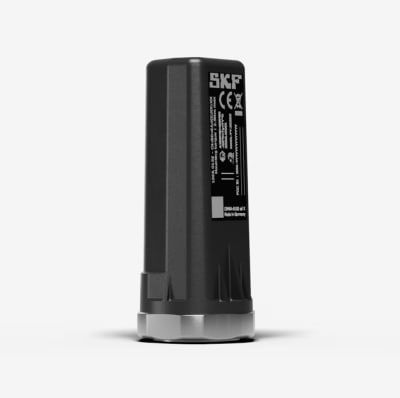
SKF’s Axios wireless sensors and QuickCollect handheld tools are complementary solutions that simplify condition monitoring and predictive maintenance for critical assets. The SKF Axios sensors automate trending and anomaly alerts via cloud analytics, while QuickCollect tools enable guided data capture via mobile apps.
SKF Axios sensors deliver continuous vibration and temperature monitoring with wireless connectivity and send data to cloud-based analytics platforms to provide users with real-time insights that enable early fault detection and support predictive maintenance, which helps avoid unplanned downtime. Similarly, QuickCollect tools offer flexible, route-based data collection that makes it easy for maintenance teams to capture and analyze machine health during routine inspections.
Together, these cost-effective solutions help detect common failure modes, such as misalignment and lubrication issues, before they escalate, enabling root cause analysis and reducing downtime by up to 35%. They’re also both easy to scale as scope requirements grow and are compatible with a wide range of rotating equipment, including bearings, motors, and gearboxes. Ideal applications extend across industries where uptime is mission-critical, such as manufacturing, energy, and automotive. For more information about SKF conditional monitoring systems, including the role they played in saving one company over $150,000 in downtime costs, visit the embedded links.
Soft starters play a critical role in protecting industrial motors and mechanical drivetrains from the stress of across-the-line starts. When large industrial motors start abruptly, they draw massive inrush current and create torque shock, which can damage belts, couplings, and gearboxes, trip breakers, and even cause voltage dips across a facility. Soft starters solve this problem by gradually ramping up voltage during startup, allowing motors to accelerate smoothly to full speed. This controlled start reduces mechanical wear, extends equipment life, minimizes downtime, and helps lower peak‑demand charges by reducing inrush current — and all while improving process stability.
If you need constant speed with reduced mechanical stress, then a soft starter is necessary, but if you need flow/pressure control and energy savings, then variable frequency drives (VFDs) are ideal. Unlike VFDs, which control both speed and start/stop, soft starters are ideal for applications that run at full speed but require gentle acceleration and deceleration. They’re widely used in pumps to mitigate water hammer via soft‑stop/pump controls, in conveyors to prevent belt snapping and product tipping, and in high-inertia loads, like blowers, to avoid costly peak power usage.
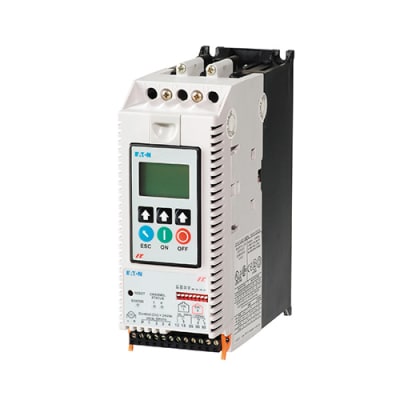
Eaton’s S811+/S801+ soft starter series delivers advanced motor protection in a compact design that’s easy to retrofit into existing motor control centers or enclosures. These starters provide smooth voltage ramp-up and soft stopping to prevent torque shock and eliminate water hammer in pump applications, while built-in overload protection and a run bypass contactor simplify installation and improve efficiency. Compatible with three-phase motors extending from fractional horsepower up to 1,000 amps, the S811+/S801+ series helps reduce mechanical stress and electrical inrush, extending equipment life, lowering maintenance costs, and improving system reliability, which is critical for industries where uptime is non-negotiable. For more information about Eaton S811+/S801+ soft starters, visit the embedded link.
Optimize your mechanical power systems with smart solutions from RS
Reducing unplanned downtime and improving reliability starts with proactive strategies and the right components. From predictive maintenance technologies and vibration sensors to soft starters, high-performance belts, and rugged gearmotors, RS offers the products and expertise you need to protect critical assets, extend equipment life, and maintain operational efficiency.
For more information about mechanical power transmission and motor control solutions from RS — including Bison SANIMotor gearmotors, Gates Poly Chain GT Carbon belts, SKF Axios wireless sensors, Eaton S811+/S801+ soft starters, and proven, cost-effective, industrial-grade RS PRO products — visit the links embedded here. For more information about industrial power reliability and predictive maintenance, check out relevant RS Expert Advice content, including:
- “A checklist for sensible motor maintenance,” a guide offering smart, practical ways to monitor equipment-wide motor performance, identify issues early, and replace components before failures disrupt operations.
- “Choosing an industrial motor starter,” an interview with Allen Bennet of RS, who addresses common motor starters and the advantages and disadvantages of each.
- “The role of soft starters in motor protection, control, and optimization for industrial and commercial applications,” an interview with Carlos Riano of Schneider Electric, who digs into motor control and protection and the role soft starters play in extending electric motor life.
- “Understanding belt and chain drives,” an interview with Will Morris of RS, who compares and contrasts chain drives with belt drives.
You can also explore these helpful resources: - Minding your mechanical power transmission systems
- The importance of bearing selection, maintenance, and alignment in mechanical power transmission systems
- Precision in motion – power in control
- Get more value from your machines
- Harnessing AI and machine learning for predictive maintenance
For assistance identifying, procuring, deploying, and maintaining mechanical power reliability solutions, contact your local RS representative at 1.866.433.5722 or reach out to the RS technical support team.